Member
Home
繁體中文
TAIWAN SHAN YIN INTERNATIONAL CO., LTD.
News
Exhibition
Magazine
Important News
Global Fastener News
About us
About TSY
Milestone
ESG: Sustainability for a better world
Management Philosophy
Awards and Recognition
Certification
Worldwide Market
Social Responsibility
Locations
Products
Patented Screws
Construction Screws
Special Screws
Automotive Screws
SKT® Coating Screws
R&D/Manufacturing
R & D capabilities
Manufacturing
Manufacturing Flow
Facility
Quality Assurance
Environmental policy
Supply Chain Security Policy
R&D Testing Report
Video
Company Introduction
Products Videos
Contact Us
High Quality Materials
Good reputation over the world.
Home
/
R&D Testing Report
/
Testing Report
/ Why is our ...
Testing Report
category
Testing Report
最新文章
The performance of SKT coating surpasses that of other brands
Performance and Testing of SO-EZ Screws
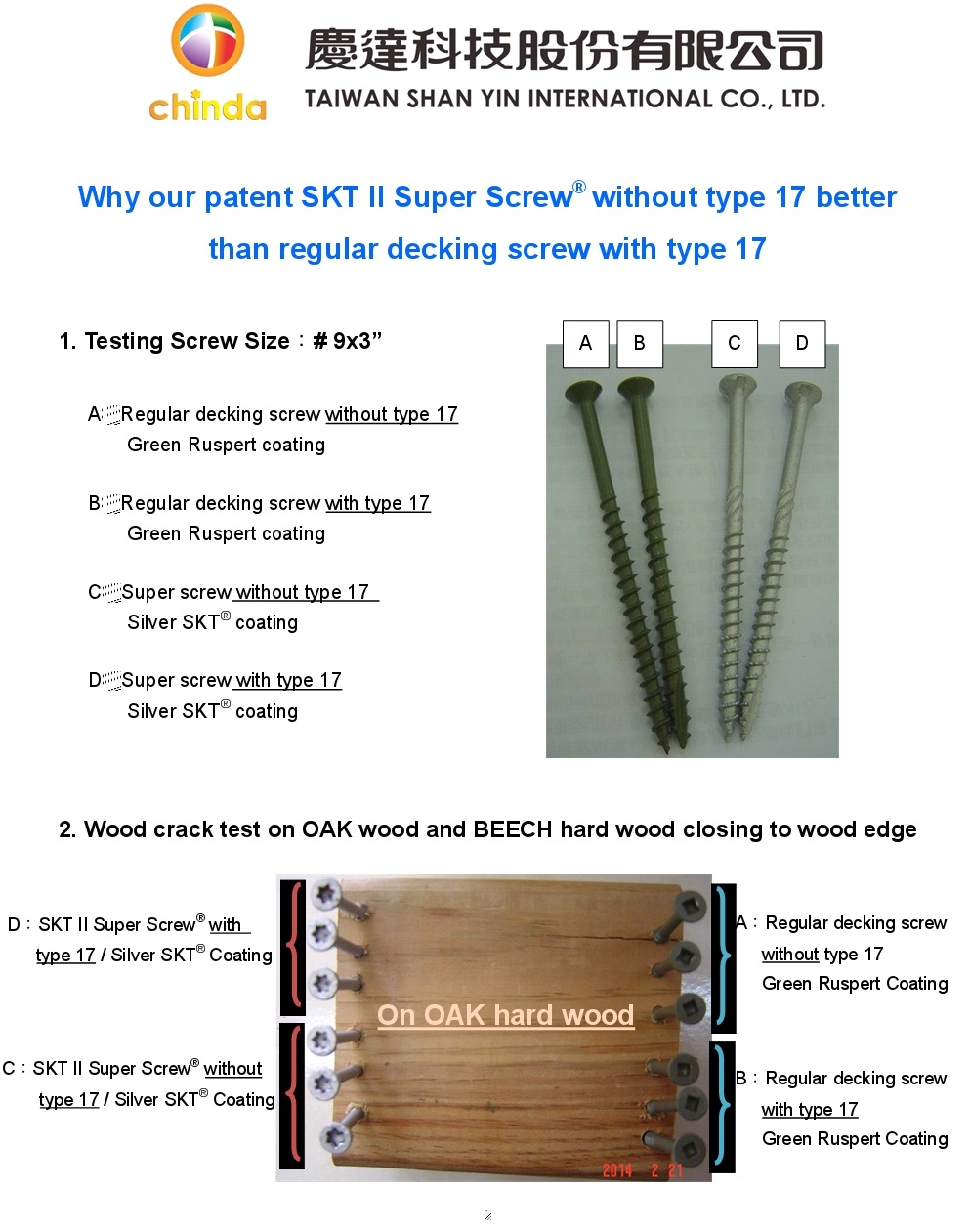
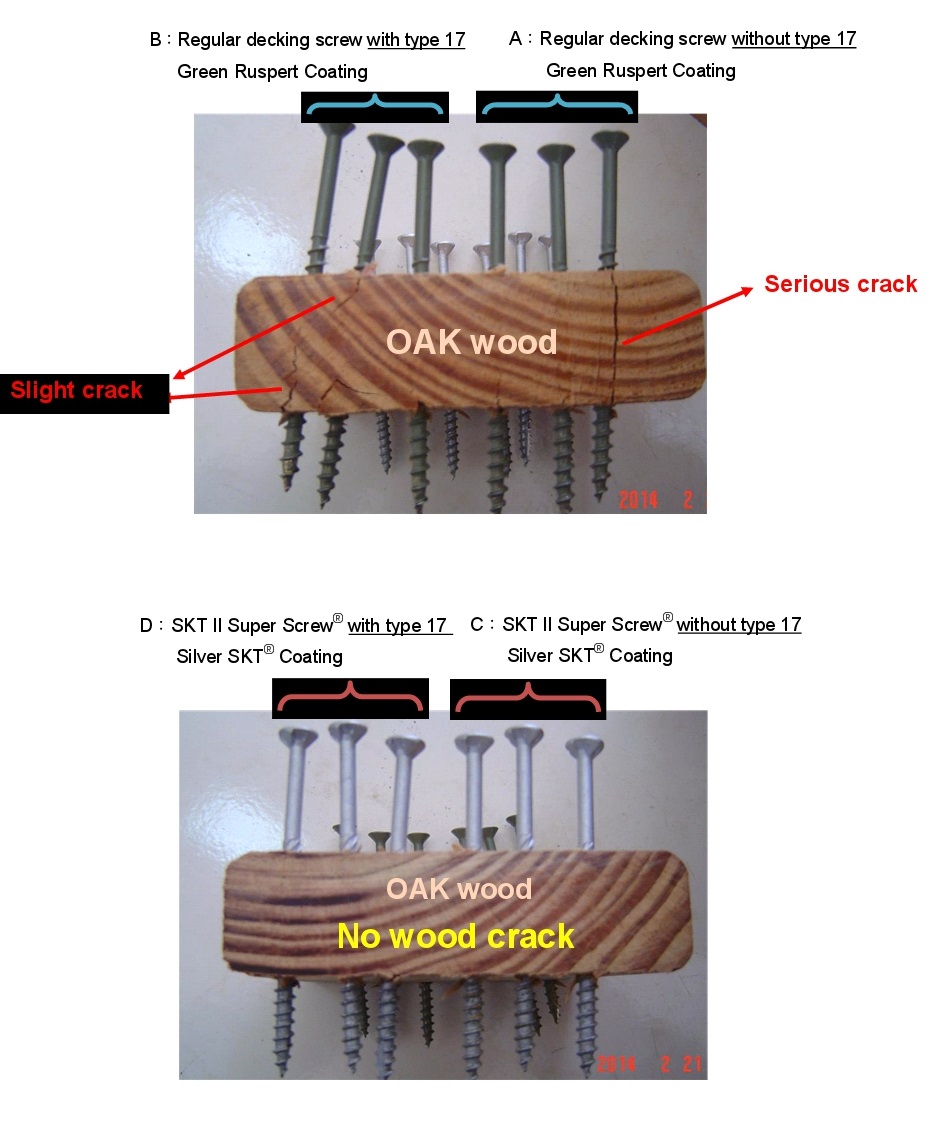
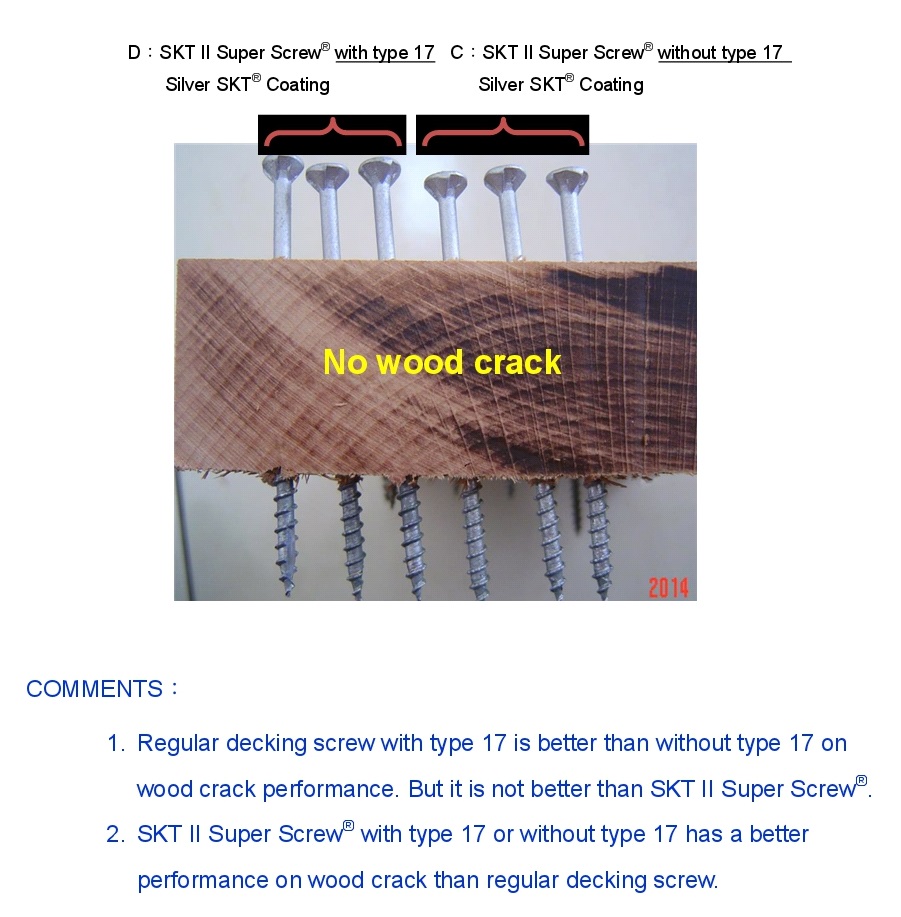
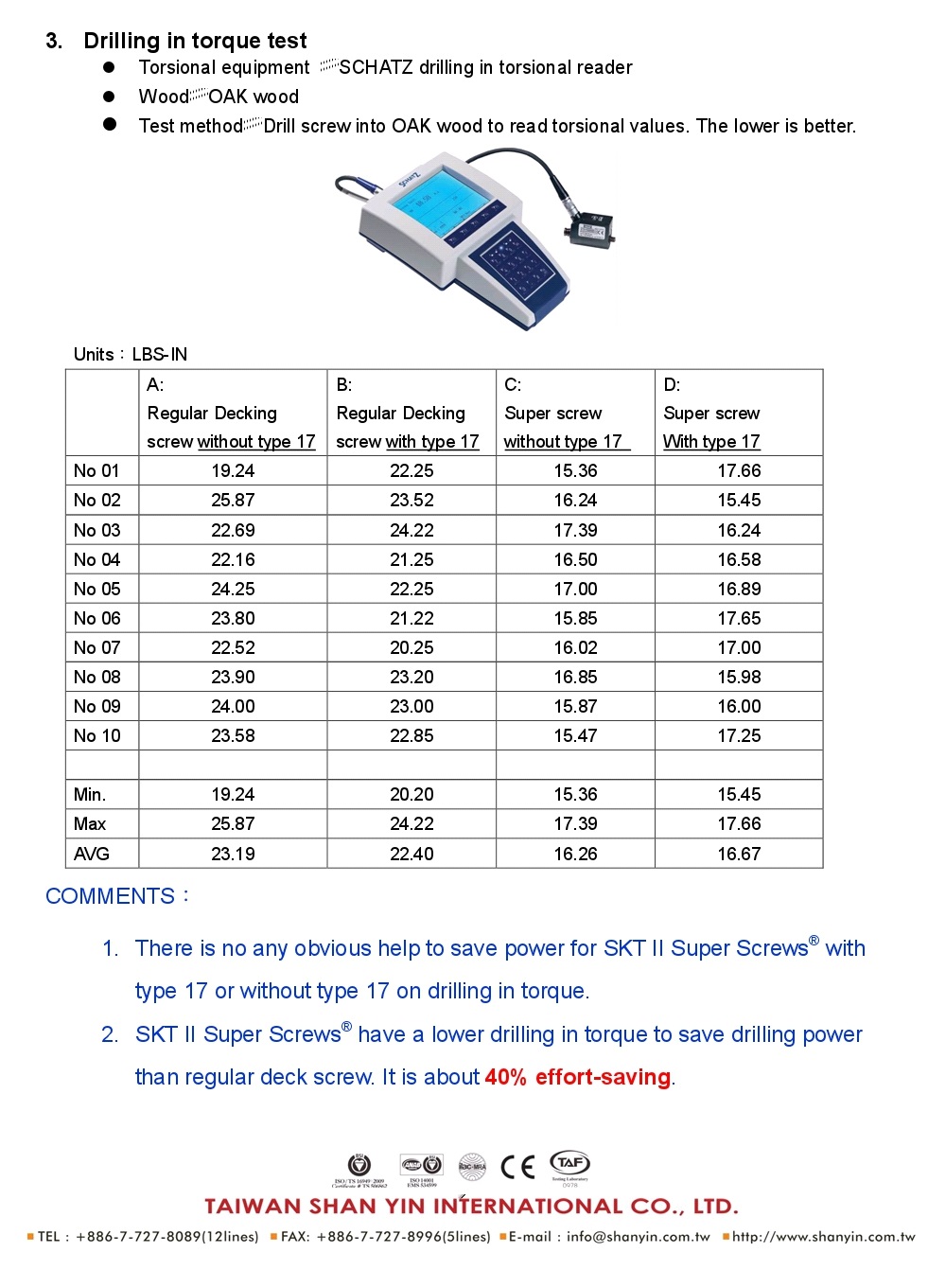
Why is our patented SKT® II Super Screw without type 17 superior to regular decking screws with type 17?
SKT® II Bimate Stainless Steel Screw Outperforms Competitor's Regular Stainless Steel Screw
Strong Austenitic Stainless Steel Screws drill into hardwood without causing cracks
2017-04-11
Why is our patented SKT® II Super Screw without type 17 superior to regular decking screws with type 17?
Tag:
← Back
Testing Report
COPYRIGHT © 2023
Taiwan shan yin
ALL RIGHTS RESERVED.